
To build brand identity for interior designers that truly stands out in today’s competitive market, designers need more than just good visuals; they need clarity, consistency, and strategic execution. Building brand identity is not a one-time task; it is an ongoing process that shapes how your audience perceives your work across every touchpoint. This guide for interior design business on creating a brand identity will help you translate your vision into a cohesive presence both online and offline.
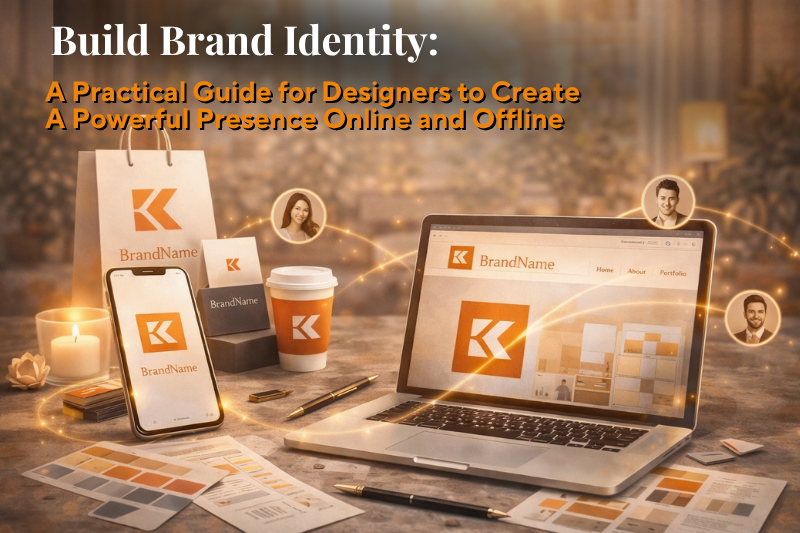
Visual Identity: The Look & Feel
Your visual identity is the most immediate expression of your brand. When you build brand identity for interior design business, the visual layer becomes the first impression clients form about your business. It communicates your personality, positioning, and professionalism without words. A strong visual identity ensures that your ArchDesign business feels cohesive, memorable, and aligned with your target audience.
A. Logo & Colour Palette
Your logo represents your brand’s personality and should reflect your style (whether minimal, bold, or luxurious) while attracting the right clients. As you build brand identity, it becomes a consistent visual anchor across platforms.
Colours also shape perception, conveying emotions like sophistication or warmth, so maintaining consistency is key when you create brand identity online. For an ArchDesignpreneur, aligning logo and colour choices with strategy ensures clarity, while random or trend-driven decisions can weaken your overall positioning.
B. Typography
Typography plays a vital role when you build brand identity, as fonts communicate tone, whether elegant, modern, or bold. Choosing the right typography reinforces your positioning and ensures your communication feels intentional. Consistency across your website, proposals, and social media creates a seamless experience and strengthens brand recall.
When you create brand identity online, even small font choices impact professionalism. For an ArchDesign business, a consistent typographic system enhances readability while ensuring every touchpoint aligns with your overall brand identity.
C. Imagery & Style Guidelines
Imagery plays a vital role in how you build brand identity for interior design business. Your photography style, mood boards, and composition reflect your design sensibility and should remain consistent. Defining clear style guidelines for editing, lighting, and framing ensures cohesion across platforms.
When you create brand identity online, consistent visuals improve recognition and professionalism. For an ArchDesignpreneur, strong imagery builds trust, showcases your unique perspective, and becomes a defining element of your brand over time.
Build Brand Identity for Interior Design Online
Your online presence is where most clients first interact with your brand. To create brand identity online, you need to ensure that every digital touchpoint reflects your positioning and personality. A cohesive online presence strengthens credibility and supports interior design business growth.
A. Website & Landing Pages
Your website is the central hub of your brand. When you build brand identity, every page, including Home, About, Services, Portfolio, and Contact, must align with your voice and visuals. A cohesive structure creates a seamless experience, reinforcing trust and professionalism while helping visitors clearly understand your value.
User experience is equally important. Intuitive navigation, layout, and content flow guide users toward action. When you create brand identity online, your website should not just look good but convert, supporting interior design business growth by turning visitors into clients.
B. Social Media
Social media is a powerful tool to build brand identity and strengthen your presence. Consistency in post formats, captions, visuals, and themes creates a recognisable style that helps your audience instantly identify your content.
Platforms like Instagram, Pinterest, and LinkedIn should reflect the same tone and positioning as your website. For an ArchDesignpreneur, social media goes beyond visibility, and it builds trust, attracts aligned clients, and steadily reinforces strong brand recognition.
C. Marketing Lead Ebooks & Free-Giveaways
Lead magnets such as ebooks and free resources help you build brand identity by offering value while showcasing your expertise and perspective. When thoughtfully created, they extend your brand and communicate your positioning to potential clients.
Consistency in design and messaging is essential. When you create brand identity online, these assets reinforce professionalism and credibility. For an ArchDesign business, they build trust early and position you as an authority, helping attract and nurture the right clients.
Extending Brand Identity Across Client Touchpoints
Building a strong brand goes beyond digital platforms. To truly build brand identity for interior design business, you need to ensure consistency across every client interaction. This creates a cohesive experience that strengthens trust and recall.
A. Proposals & Presentations
Proposals and presentations are key touchpoints in your client journey. When you build brand identity, these materials should reflect your visual style and messaging. Branded templates improve professionalism and help create a strong first impression with potential clients.
Consistency between what you promise and what you present is essential. For an ArchDesignpreneur, well-designed proposals show attention to detail, build confidence, and improve conversions while strengthening your overall brand perception.
B. In-Person Office Spaces
Your physical space is an extension of your brand. When you build brand identity, your office should reflect your design philosophy and personality. It creates an immersive experience for clients.
Every element from furniture to lighting should align with your brand identity. This consistency reinforces your positioning and makes your brand more memorable. It also enhances the overall client experience.
For an ArchDesign business, a well-designed office becomes a powerful branding tool. It showcases your expertise in a tangible way. This strengthens trust and credibility.
Mistakes That Weaken Your Interior Design Brand Identity
A strong brand is not just created through strategy. But it is sustained through consistent and intentional actions. Many designers struggle not because they lack talent, but because certain mistakes quietly weaken their brand over time. Recognising these gaps is the first step toward building a more aligned and impactful presence.
Inconsistent Visuals and Messaging Across Platforms
When your visuals and messaging change from one platform to another, it creates confusion in the minds of your audience. Your brand begins to feel scattered, making it harder for clients to recognise or remember you. Consistency in colours, fonts, tone, and communication builds familiarity and trust. Without it, even good design work can lose its impact.
Copying Competitors Instead of Defining Your Own Identity
It can be tempting to replicate what seems to be working for others, but this often leads to a diluted brand. When you copy competitors, you lose the opportunity to showcase your unique perspective and design philosophy. Clients may start comparing you based on price instead of value. A distinctive identity comes from clarity and originality, not imitation.
Ignoring Brand Voice and Focusing Only on Aesthetics
Many designers invest heavily in visuals but overlook how they communicate. Without a clear brand voice, your messaging can feel generic and disconnected from your actual values. Clients may appreciate your work visually but fail to connect with your approach. A strong brand requires both compelling visuals and consistent communication to create a complete experience.
Lack of Clarity in Positioning and Target Audience
When your positioning is unclear, your messaging becomes too broad and ineffective. Trying to appeal to everyone often results in attracting the wrong clients. This can lead to misaligned expectations and challenging projects. Clear brand positioning helps you speak directly to the right audience and strengthens your overall brand identity.
Treating Branding as a One-Time Task Instead of an Ongoing Process
Branding is not something you complete once and move on from. As your business evolves, your brand should evolve with it. Ignoring this can make your brand feel outdated or disconnected from your current direction. Regular refinement ensures that your brand remains relevant, aligned, and effective in supporting your growth.
How Building Brand Identity Drives Business Growth
When you build brand identity effectively, it directly impacts your interior design business growth. Most important impacts of building brand identity:
- A strong identity increases perceived value, allowing you to price your services with confidence. Clients are more willing to invest when they clearly understand your value.
- Brand recognition also improves recall and referrals. A consistent presence makes your business more memorable. This leads to organic growth through word-of-mouth and repeat clients.
- Clarity in brand identity simplifies marketing decisions. When you know what aligns with your brand, it becomes easier to create content and campaigns. As Shanker De highlights, clarity leads to confidence, and confidence drives results.
For an ArchDesignpreneur, this clarity transforms how you show up in your business. It enables you to operate as a confident ArchDesign business owner with a clear direction. Ultimately, a strong brand identity becomes a key driver of long-term success.
Conclusion
To build brand identity that truly stands out, you need more than design; you need consistency, clarity, and intentional execution. From your visual identity to your client experience, every element contributes to how your brand is perceived. A strong and cohesive approach ensures that your brand remains memorable and impactful.
If you are ready to strengthen your brand and elevate your ArchDesignpreneur journey, start by reviewing your current touchpoints. Identify gaps, refine your visuals, and align your messaging.
Which area of your brand identity needs the most improvement right now? Share your thoughts in the comments; I’d love to hear from you.
If you’re serious about scaling your ArchDesign business, book a call today with our ArchScale Guild team and take the next step toward building a powerful and consistent brand presence.

Shanker De is an ArchDesign Business Coach, entrepreneur, and Founder of ArchScale Guild. With 25+ years of experience across 330+ businesses in 15 countries, he helps the founders, principals and studio owners of growing ArchDesign firms, especially in Tier 2 & Tier 3 cities, turning inconsistent leads, silent sales and fluctuating revenue into predictable 2x–5x growth.
Using his proven ArchScale Business Growth Model (BGM), Shanker supports every ArchDesignpreneur in building a scalable ArchDesign business without founder burnout, underpricing, or constant overwhelm.