
Upselling in interior design is often misunderstood by many professionals in the design industry. For many designers, the idea of recommending higher-value options to clients can feel uncomfortable, almost like pushing unnecessary expenses. However, when done correctly, upselling is not about persuading clients to spend more, but it is about helping them make better decisions that enhance the final design outcome.
For those building a scalable ArchDesign business, understanding this concept becomes critical. Many professionals struggle with pricing and value communication, and ethical upselling can bridge that gap effectively. As Shanker De, the ArchDesign Business Coach (ABC), often explains, structured value communication is one of the most important skills for long-term design business success.
What Upselling Actually Means in Interior Design
Upselling is widely used across industries, yet many design professionals misunderstand how it applies to their field. In the context of design services, it is not a sales gimmick but a sales skill or method of helping clients achieve a better version of their vision.
For a growing ArchDesign business, upselling becomes a tool to improve both client outcomes and project profitability. When designers communicate upgraded solutions confidently, they move from simply executing client instructions to guiding the overall design experience.
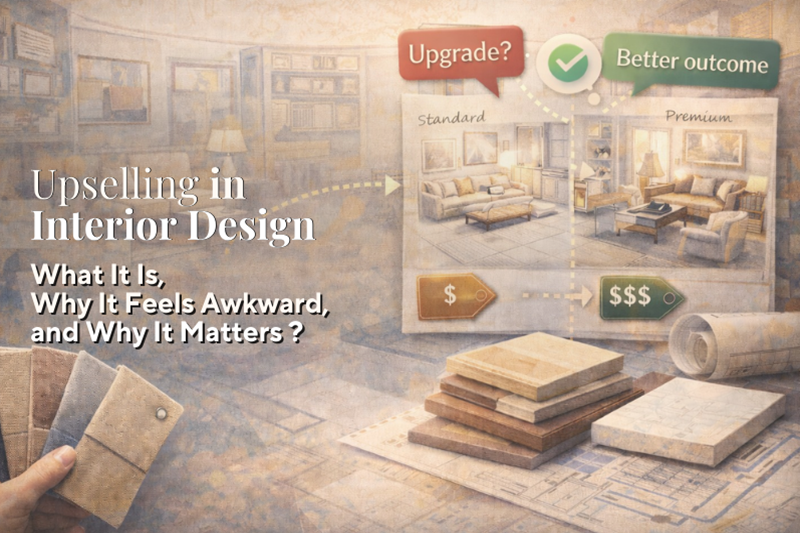
Upselling is based on sales psychology that focuses on increasing value rather than pushing higher spending. It simply means recommending a higher-value or upgraded version of something the client already wants. Instead of adding unnecessary items, the designer improves the quality or performance of the existing choice.
In upselling in interior design, this could mean suggesting premium materials, better lighting solutions, or more durable finishes that enhance long-term results. These recommendations elevate the design outcome while helping clients understand the full potential of their space. When explained clearly, clients see the designer as a trusted advisor rather than just a service provider.
Upselling vs Cross-Selling (Interior-Specific Examples)
Upselling and cross-selling are often confused, but they serve different purposes within a design project.
Upselling focuses on upgrading the existing selection, while cross-selling involves introducing complementary services or products.
For example, recommending custom millwork instead of standard cabinetry would be considered upselling because it enhances the quality of an element the client already wants. The client still receives cabinetry, but the upgraded version improves aesthetics, durability, and customization possibilities.
On the other hand, cross-selling occurs when an additional service is introduced to complement the project. For instance, offering a styling or décor package after completing a renovation would be cross-selling.
Upselling is a Service, Not a Sales Trick
One of the biggest misconceptions about upselling in interior design is that it is manipulative. In reality, ethical upselling is a service that helps clients make informed decisions about their investment.
Design professionals have far more knowledge about materials, durability, and design impact than the average client. By presenting upgraded options along with clear explanations, designers ensure that clients are aware of choices that could significantly improve their space.
Ethical upselling builds trust because clients feel supported rather than pressured. Over time, this approach strengthens loyalty and often leads to repeat projects and referrals. For an ArchDesignpreneur, this mindset shift from selling to guiding transforms the client relationship entirely.
Why Upselling Feels So Awkward for Interior Designers
Despite its benefits, many designers still struggle with upselling conversations. The discomfort usually stems from mindset barriers rather than actual client resistance. Recognising these psychological barriers is the first step to overcoming them.
A. Creative Identity vs Sales Identity
Many designers strongly identify with their creative role. They see themselves as artists, problem-solvers, and visionaries rather than business professionals responsible for generating revenue.
Because of this mindset, discussing pricing or premium options can feel uncomfortable. Designers sometimes worry that talking about money will dilute the creative aspect of their work.
However, in reality, design and business are inseparable. An ArchDesignpreneur must balance creativity with strategic communication. When designers view upselling as a way to enhance the design outcome rather than a sales tactic, the discomfort begins to fade.
B. Fear of Being Perceived as Greedy
Money conversations often carry emotional baggage. Many designers worry that recommending expensive upgrades might make them appear greedy or self-serving.
This fear frequently leads to undercharging or avoiding premium recommendations entirely. Designers may present only the lowest-cost option, assuming that clients prefer minimal spending.
However, clients often expect professionals to recommend the best possible solutions. When designers hold back valuable suggestions, they may unintentionally limit the project’s potential.
C. Budget Sensitivity & Assumptions
Another reason upselling feels uncomfortable is the assumption that clients cannot afford upgrades. Designers sometimes filter options based on perceived budget limitations before even discussing them.
This assumption can lead to missed opportunities for both the client and the designer. Many clients are willing to invest more when they clearly understand the long-term benefits.
By presenting multiple options transparently, designers allow clients to make informed choices rather than limiting their possibilities.
D. Lack of Sales Education in Design Training
Design education traditionally focuses on aesthetics, materials, and technical drawing skills. Business and sales conversations are rarely part of the curriculum.
As a result, many designers enter the industry without structured strategies for discussing value or pricing. Without these frameworks, upselling conversations can feel awkward and uncertain.
Learning these skills later in the business journey can significantly transform a designer’s confidence and revenue potential.
The Psychology Behind Ethical Upselling
Understanding the psychology behind buying decisions can make upselling feel more natural and less forced. Clients rarely make decisions purely based on price; they evaluate the overall value and outcomes they expect to achieve.
A. People Buy Better Outcomes, Not Features
Clients rarely purchase materials or furniture simply because of technical specifications. Instead, they invest in the transformation those elements create within their space.
When recommending upgrades, designers should focus on how the improvement enhances lifestyle, durability, and aesthetics. For example, a premium flooring option might offer better longevity, lower maintenance, and a more luxurious appearance.
By emphasising outcomes instead of features, designers help clients understand the long-term benefits of their investment.
B. Trust Lowers Resistance
Trust plays a crucial role in client decision-making. When clients trust their designer’s expertise, they are far more open to recommendations.
If an upgrade is presented with transparency and clear reasoning, clients perceive it as guidance rather than persuasion. The tone and timing of the conversation significantly influence how the suggestion is received.
Designers who build trust early in the process often find that upselling becomes a natural extension of the design consultation.
C. Anchoring & Framing
Psychological principles such as anchoring and framing can also help normalise premium options. Anchoring involves presenting a higher-value option first so that other alternatives feel more reasonable by comparison.
For example, showing a premium cabinetry option alongside standard alternatives creates context for the price range. Clients begin to evaluate choices relative to the anchor rather than viewing each option in isolation.
Structured options also reduce decision fatigue. When designers present clear tiers or packages, clients feel more comfortable making upgrades.
Why Upselling Actually Matters in Interior Design
Beyond increasing revenue, upselling in interior design plays a significant role in delivering exceptional design outcomes and strengthening brand perception. It becomes a strategic tool that improves both project quality and financial sustainability.
A. Better Client Results
Upselling often leads to better design outcomes because it allows designers to recommend higher-quality materials and solutions. Premium finishes, better lighting systems, and durable furniture can significantly improve the functionality and longevity of a space.
Clients who invest in quality upgrades often experience fewer maintenance issues and greater satisfaction over time. The overall aesthetic impact of the design also becomes more refined and cohesive.
By recommending these upgrades responsibly, designers ensure that clients receive the best possible version of their envisioned space.
B. Increased Project Profitability
From a business perspective, upselling can improve project profitability without requiring a proportional increase in workload. Upgraded materials or custom solutions often carry higher margins while requiring similar design effort.
This means designers can increase revenue per project without dramatically expanding their schedule. Instead of taking on more clients, they can focus on delivering higher-value projects.
C. Stronger Brand Positioning
Designers who confidently recommend premium solutions position themselves as experts rather than service providers simply fulfilling instructions. Clients begin to see them as trusted advisors with specialised knowledge.
This shift in perception strengthens brand credibility and market positioning. Designers who consistently guide clients toward high-quality outcomes are often associated with premium experiences.
Over time, this reputation attracts clients who appreciate expertise and are willing to invest in exceptional design.
D. Client Loyalty & Referrals
When clients feel that their designer genuinely guided them toward better decisions, satisfaction levels increase significantly. They are more likely to recommend the designer to friends, family, or colleagues.
Ethical upselling often results in spaces that exceed expectations. Clients appreciate the foresight and expertise that improved their final design outcome.
This long-term satisfaction strengthens relationships and contributes to consistent referrals and repeat projects.
Common Myths About Upselling
Several misconceptions continue to discourage designers from practicing upselling effectively. These myths often stem from misunderstandings about client psychology and professional responsibility.
Dispelling these beliefs can help designers approach value communication with greater confidence.
Myth 1: “It will annoy my client.”
Many designers assume that suggesting upgrades will irritate clients. In reality, clients often expect professionals to present better alternatives when available. When presented respectfully, these recommendations are usually appreciated.
Myth 2: “If they wanted it, they would ask.”
Clients cannot ask about options they do not know exist. Designers have deeper knowledge about materials, finishes, and design possibilities. Sharing these options allows clients to make informed decisions.
Myth 3: “It’s manipulative.”
Upselling becomes manipulative only when it prioritizes profit over client benefit. Ethical upselling focuses on improving outcomes, not forcing unnecessary spending.
Myth 4: “Luxury clients don’t need guidance.”
Even high-budget clients rely on professional expertise to navigate complex design decisions. Guidance from an experienced designer helps them invest wisely.
Conclusion
Upselling in interior design is not about pushing expensive upgrades or convincing clients to spend beyond their means. Instead, it is a thoughtful process of helping clients discover better possibilities for their space.
When designers understand the psychology behind decision-making and communicate value clearly, upselling becomes a natural extension of their design expertise. Clients benefit from improved outcomes, while designers create more sustainable and profitable businesses.
If this article helped you rethink upselling in interior design, share your thoughts in the comments below.
If you want to learn how to confidently communicate value, structure premium offerings, and grow a scalable ArchDesign business, you can also book a strategy call with Shanker De and explore how to build a stronger, more profitable design practice.

Shanker De is an ArchDesign Business Coach, entrepreneur, and Founder of ArchScale Guild. With 25+ years of experience across 330+ businesses in 15 countries, he helps the founders, principals and studio owners of growing ArchDesign firms, especially in Tier 2 & Tier 3 cities, turning inconsistent leads, silent sales and fluctuating revenue into predictable 2x–5x growth.
Using his proven ArchScale Business Growth Model (BGM), Shanker supports every ArchDesignpreneur in building a scalable ArchDesign business without founder burnout, underpricing, or constant overwhelm.