
An effective interior design discovery call is no longer optional but is the foundation of every successful project. Before design concepts, mood boards, or site visits begin, the clarity built during a discovery call determines how smoothly the entire journey unfolds. In today’s competitive landscape, an ArchDesign business cannot rely on guesswork or assumptions. A well-led discovery call ensures that both you and your client are aligned from day one.
As Shanker De, the ArchDesign Business Coach (ABC), often emphasises, clarity at the beginning eliminates confusion later. Whether you are an emerging ArchDesignpreneur or scaling your practice, mastering the interior design discovery call will transform how you approach projects and clients.
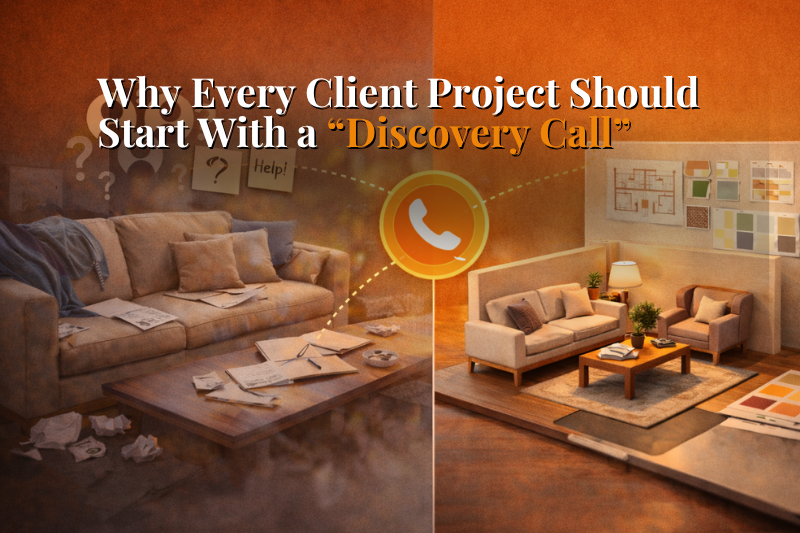
What is a Discovery Call?
A well-structured interior design discovery call is the foundation of a successful project. It shifts the focus from giving quick design suggestions to deeply understanding the client’s needs, expectations, and goals, which sets a professional tone right from the start.
- A structured conversation designed to understand the client before offering solutions
- Focuses on asking thoughtful interior design discovery call questions, not giving instant advice
- Helps uncover client needs, lifestyle preferences, and true project motivations
- Allows you to assess if the project and client are the right fit for your expertise
- Positions your ArchDesign business as process-driven and professional
- Enables an ArchDesignpreneur to lead conversations strategically, not reactively
- Becomes a powerful tool for attracting better clients and improving conversions
Why Discovery Calls Matter
A strong interior design discovery call does more than gather information, and it shapes the entire client relationship. When guided by the right discovery call questions, it creates clarity, builds trust, and sets expectations that prevent future friction. Let’s explore why this step is critical.
A. Clarifies Client Vision & Goals
A structured discovery call helps turn vague ideas into clear direction. By asking the right discovery call questions, you uncover not just style preferences but deeper lifestyle needs and long-term goals. This clarity ensures your design solutions are intentional, aligned, and meaningful for your ArchDesign business.
B. Aligns Expectations Early
An interior design discovery call sets clear expectations around timelines, scope, and deliverables from the start. Using direct discovery call questions creates transparency and reduces misunderstandings. This early alignment prevents scope creep and supports consistent interior design business growth.
C. Builds Trust and Confidence
Clients trust professionals who truly listen. A well-led interior design discovery call, guided by thoughtful questions, shows that you value their needs. This builds confidence and positions you as a reliable expert, strengthening long-term relationships as an ArchDesignpreneur.
D. Qualifies Ideal Clients
Not every client is the right fit, and an interior design discovery call helps you identify that early. Through targeted discovery call questions, you can assess alignment in budget, expectations, and working style. This ensures your ArchDesign business attracts the right projects, not just more projects.
E. Shortens Sales Cycles & Increases Bookings
A clear and structured discovery call helps clients make faster decisions. The right discovery call questions remove confusion and guide them toward confident commitments. This leads to quicker conversions, fewer delays, and stronger interior design business growth.
F. Elevates You as a Trusted Advisor, Not Just a Vendor
How you lead your interior design discovery call shapes how clients see you. By asking strategic discovery call questions, you position yourself as an expert, not just a service provider. This builds authority and helps you operate as a confident ArchDesign business owner who attracts higher-value projects.
Myths That Keep Designers Derailed
Despite its importance, many professionals avoid or misuse the discovery call due to common misconceptions. Let’s address them.
Myth 1: “Discovery calls waste time.”
A poorly structured call may feel like a waste, but a strategic interior design discovery call saves time in the long run. By asking the right discovery call questions, you eliminate confusion early. Time invested upfront reduces revisions and miscommunication later. It is a proactive approach, not a delay.
Myth 2: “Clients won’t commit if I ask too many questions.”
Clients appreciate thoughtful questions when they are relevant. A well-balanced interior design discovery call uses questions to create clarity, not overwhelm. In fact, the right questions build confidence and demonstrate professionalism. It shows that you are invested in delivering the right solution.
Myth 3: “I have to talk about pricing on the first call.”
Pricing does not need to dominate your interior design discovery call. Instead, focus on understanding the project through meaningful discovery call questions. Once clarity is established, pricing becomes easier to communicate. This approach prevents premature negotiations.
Myth 4: “Discovery calls should be free consultations.”
A discovery call is not about giving away free advice. A structured discovery call is about gathering insights through interior design discovery call questions. It is a strategic conversation, not a design session. Treating it as such elevates your positioning.
Myth 5: “Only big projects need discovery calls.”
Every project benefits from clarity. Whether large or small, a discovery call ensures alignment through the right interior design discovery call questions. Skipping this step increases the risk of misunderstandings. Consistency is key for a professional process.
What to Cover in a Discovery Call
A successful interior design discovery call is guided by structure. Covering the right areas ensures that your discovery call questions deliver meaningful insights.
A. Project Goals & Objectives
Understanding why the project exists is essential. Use the right questions to uncover both functional and emotional goals. This helps you align your design approach with their expectations. Clear goals lead to focused execution.
B. Style Preferences & Inspirations
Every client has a visual language. Through the discovery call, explore their inspirations using targeted discovery call questions. This ensures your concepts resonate with their taste. It also reduces subjective revisions later.
C. Budget & Timeline Expectations
Clarity around budget and timeline is critical. Addressing this during the discovery call through direct questions avoids future friction. It allows you to plan realistically and manage expectations effectively.
D. Decision-Making & Communication Style
Understanding how the client makes decisions is key. Use discovery call questions to identify stakeholders and communication preferences. This helps streamline collaboration. It also prevents delays caused by unclear decision processes.
E. Scope Essentials vs Nice-to-Haves
Not everything is equally important. A structured discovery call helps differentiate priorities using clear questions. This allows you to focus on what truly matters. It also helps manage scope effectively.
F. Functional Needs
Design is not just about aesthetics. Through the interior design discovery call, explore how the space will be used with practical call questions. Functionality ensures long-term satisfaction. It bridges the gap between beauty and usability.
G. Pain Points & Challenges
Every project starts with a problem. A thoughtful interior design discovery call uses questions to uncover these challenges. Understanding pain points allows you to position your solution effectively. It also strengthens client trust.
Essential Discovery Call Questions
The success of your interior design discovery call depends on the quality of your questions. Strong discovery call questions guide the conversation and uncover meaningful insights.
- “What inspired you to start this project now?”
- “What problems are you hoping to solve?”
- “Describe your ideal outcome.”
- “What is your budget range?”
- “Who will be the primary decision-maker?”
- “What design styles do you love vs hate?”
Each of these discovery call questions serves a purpose. Together, they create a complete understanding of the client and project.
Conclusion
A well-structured discovery call is not just a conversation, but it is the foundation of a successful project. By asking the right interior design discovery call questions, you create clarity, build trust, and position yourself as a true professional. This is what separates reactive designers from strategic thinkers.
If you are ready to refine your process and elevate your ArchDesign business, now is the time to take action. Learn from experts like Shanker De and start implementing a system that works.
If this resonated with you, comment below with your biggest takeaway or challenge with discovery calls. And if you’re ready to transform your approach, book a call today with our ArchScale Guild team and take the next step toward becoming a successful ArchDesignpreneur.

Shanker De is an ArchDesign Business Coach, entrepreneur, and Founder of ArchScale Guild. With 25+ years of experience across 330+ businesses in 15 countries, he helps the founders, principals and studio owners of growing ArchDesign firms, especially in Tier 2 & Tier 3 cities, turning inconsistent leads, silent sales and fluctuating revenue into predictable 2x–5x growth.
Using his proven ArchScale Business Growth Model (BGM), Shanker supports every ArchDesignpreneur in building a scalable ArchDesign business without founder burnout, underpricing, or constant overwhelm.