
In today’s digital-first world, clients form opinions long before they ever schedule a call. By the time they reach out, they’ve already decided whether you feel credible, aligned, and worth their investment. This makes trust the true entry point into your business, not the discovery call. Learning how to build trust with clients online is no longer optional; it’s essential for attracting better-fit projects and creating smoother collaborations.
For ArchDesign professionals, trust is not built through persuasion but through clarity, consistency, and confidence. Every touchpoint from your website to your social media quietly answers one question: Can I trust you with my space, time, and money? When that question is answered early, sales conversations become easier, faster, and far more aligned.
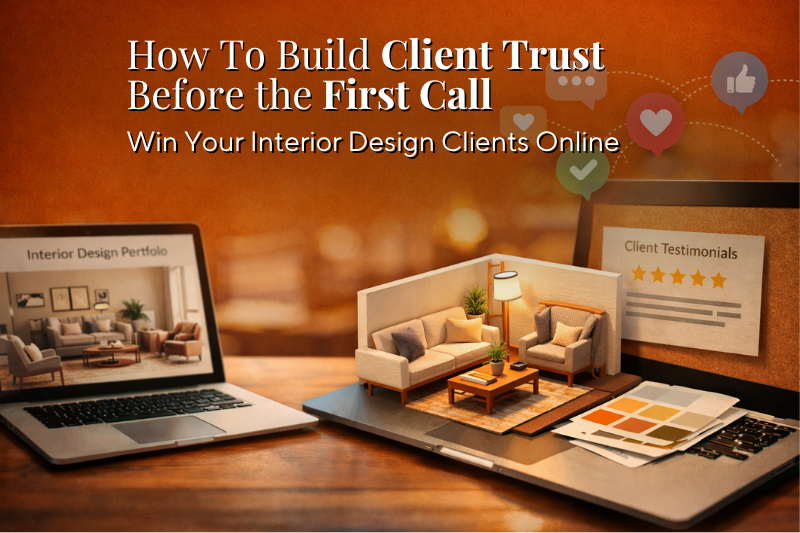
Why Trust Matters Before the First Interaction
Trust determines whether a potential client moves forward, hesitates, or disappears entirely. In high-investment services like design, clients are not just buying aesthetics, but they are investing in expertise, leadership, and decision-making. Without early trust, they arrive guarded, price-sensitive, and uncertain.
When trust is established before the first call, the dynamic shifts completely. Conversations become collaborative instead of defensive. Clients are more open about budgets, timelines, and expectations because they feel secure. This leads to higher-quality enquiries, fewer no-shows, and stronger long-term relationships.
Many designers struggle to build trust online because their brand lacks clarity and strategic positioning. This is where most opportunities are lost, not in skill but in perception.
The Problem With Relying on Discovery Calls
Relying heavily on discovery calls puts too much pressure on a single interaction to build trust, explain value, and qualify clients all at once. When trust isn’t pre-built, these calls often become exhausting and ineffective.
Discovery calls turn into value-justification sessions
Instead of discussing fit, designers spend time explaining basics and defending pricing. This weakens authority and shifts the power dynamic.
Unqualified leads consume time and energy
Without trust filters, many enquiries come from curious but uncommitted prospects. This leads to wasted hours and low conversions.
Repetition becomes inevitable
When your content doesn’t communicate clearly, you end up repeating your process and boundaries on every call. This is inefficient and unsustainable.
Price resistance increases
Without trust, clients compare you to cheaper alternatives. Design becomes a commodity instead of a strategic investment. Discovery calls should refine alignment, not compensate for missing trust.
Myths That Keep Designers Stuck
Many designers unknowingly operate with beliefs that weaken their ability on how to build trust with clients intentionally.
Myth 1: “My work should speak for itself.”
Visuals attract attention, but they don’t explain thinking or decision-making. Clients need context to feel confident.
Myth 2: “Clients don’t read.”
Clients may skim, but they actively look for clarity and reassurance when making high-investment decisions. Words convert interest into action.
Myth 3: “Trust is built only through conversations.”
In reality, most trust is formed before the first interaction. Digital presence works 24/7 to build familiarity.
Myth 4: “Transparency reduces authority.”
Clarity actually signals professionalism. When expectations are clear, clients feel safer and more confident.
Letting go of these myths is the first step toward building a trust-led brand.
The Four Core Trust Drivers
Trust is not random, but it is built through four consistent signals:
Authority: Clients need to feel that you are capable and confident in your decisions. Authority comes from how you explain, guide, and educate, not just what you show.
Social Proof: People trust what others have already trusted. Testimonials, reviews, and case studies reduce uncertainty quickly.
Relatability: Clients want to feel understood. When your messaging reflects their goals and concerns, connection builds naturally.
Reassurance: Clarity around process, timelines, and expectations reduces fear. Predictability builds confidence.
Strong brands intentionally design for all four, not just one.
Authority: Show Your Expertise Clearly
Authority is demonstrated, not claimed. Clients trust designers who guide decisions with clarity and confidence.
- Publishing helpful, decision-focused content such as guides, FAQs, and tips shows that you understand real client concerns. This positions you as a trusted advisor rather than just a service provider.
- Sharing your process is equally important. Instead of only showcasing final visuals, explain how decisions are made. This helps clients understand the value behind the outcome.
- Finally, articulate client problems clearly. When you can express their challenges better than they can, trust accelerates instantly.
Social Proof: Build Confidence Through Evidence
Social proof is one of the fastest ways on how to build trust with clients online.
- Client testimonials work best when they highlight specific outcomes, not just praise. Adding photos or videos increases authenticity and relatability.
- Case studies go deeper by showing transformation. Explaining the challenge, approach, and result helps clients imagine similar success for themselves.
- Reviews from platforms like Google or social media act as digital word-of-mouth. They add credibility because they are perceived as unbiased.
- Third-party validation, such as features or awards, further reinforces your authority, especially for premium positioning.
Relatability: Create Emotional Connection
Relatability bridges the gap between expertise and approachability. Clients don’t just want to be impressed, but they also want to feel understood.
- Use language that reflects your ideal client’s lifestyle, goals, and concerns. Avoid jargon and focus on outcomes they care about.
- Show your personality and values clearly. This helps clients self-select and creates stronger alignment.
- Behind-the-scenes content also plays a powerful role. It humanises your brand and builds transparency, making your process feel less intimidating.
Process Clarity: Replace Uncertainty With Confidence
Uncertainty is one of the biggest barriers to trust. When clients don’t know what to expect, hesitation increases.
- Clearly explain what happens before the first call so clients feel prepared.
- Outline your onboarding process to show structure and professionalism.
- Sharing timelines and collaboration norms sets realistic expectations. This reduces future friction and builds confidence early.
Predictability signals leadership, and leadership builds trust.
Value-Driven Content That Builds Trust at Scale
Content is one of the most powerful tools for building trust consistently.
- Educational blog posts answer real client questions while positioning you as an expert. They also improve your visibility through search.
- Free resources like checklists or guides provide immediate value. This builds goodwill and encourages deeper engagement.
- Portfolio storytelling adds context to your work, helping clients understand decisions rather than just admire visuals.
- FAQs and selective pricing transparency reduce hesitation and filter serious enquiries.
Over time, content becomes a silent trust-building system that works continuously.
Strategic Touchpoints That Build Trust Online
Trust is built across multiple moments, not just one. Let’s look into the strategic touchpoints on how to build trust with clients.
- Your website homepage should clearly communicate who you help and the transformation you provide. Clarity reduces confusion instantly.
- Portfolio pages should include context, not just visuals. This demonstrates strategic thinking and builds confidence.
- Your About page should balance personality with credibility. Clients want to know who they are trusting.
- A blog positions you as a guide by offering helpful, SEO-driven insights. Consistency here builds long-term authority.
- Social media reinforces trust through repetition and relatability. It helps clients feel familiar with you before reaching out.
- Lead magnets offer value upfront, showing generosity and expertise without pressure.
Each touchpoint should work together to create a seamless, trust-led experience.
Quick Wins on How to Build Trust with Clients Faster
You don’t need a complete overhaul to start seeing results.
- Adding testimonials above your inquiry form can immediately reduce hesitation at the decision stage.
- A short process explainer video builds clarity and connection quickly. It also pre-qualifies clients before they reach out.
- Publishing a few targeted blog posts addressing common concerns can establish authority faster than constant posting.
- Sharing behind-the-scenes content on social media builds transparency and familiarity.
- Creating a dedicated FAQ page helps address objections proactively.
Small changes, when done strategically, create powerful momentum.
Measuring Trust: What to Track
Trust may feel intangible, but it shows up clearly in data.
- Higher enquiry rates indicate reduced hesitation. More people feel confident reaching out.
- Improved contact form conversions show that clients feel safe sharing their details.
- Lower bounce rates on key pages suggest that your content is building interest and relevance.
- Increased engagement on social media reflects growing familiarity and comfort.
- Higher show-up rates for calls indicate stronger commitment and alignment.
These signals help you refine your strategy and strengthen weak points.
Conclusion
Trust is no longer built during the first call, but it is built long before it. When your online presence educates, reassures, and connects, clients arrive already aligned. This transforms sales conversations into strategic discussions instead of justifications.
For ArchDesign professionals, intentional trust-building is the fastest path on how to build trust with clients and create smoother projects. It allows your brand to work for you: filtering, qualifying, and nurturing leads before you ever speak to them.
If you want to improve your results, start by auditing your current touchpoints. Identify where clarity, proof, or reassurance is missing, and strengthen those areas intentionally.
Trust may be quiet, but it is one of the most powerful drivers of sustainable growth when built right.
What’s one area in your online presence where you feel clients hesitate the most? Comment below, and our team will help you identify what might be missing and how to strengthen it.
Need more clarity on your next step? Book a call with our ArchScale Guild team, and we’ll help you move forward with confidence.

Shanker De is an ArchDesign Business Coach, entrepreneur, and Founder of ArchScale Guild. With 25+ years of experience across 330+ businesses in 15 countries, he helps the founders, principals and studio owners of growing ArchDesign firms, especially in Tier 2 & Tier 3 cities, turning inconsistent leads, silent sales and fluctuating revenue into predictable 2x–5x growth.
Using his proven ArchScale Business Growth Model (BGM), Shanker supports every ArchDesignpreneur in building a scalable ArchDesign business without founder burnout, underpricing, or constant overwhelm.