
Overwhelm in interior design is not just about having too much work. It is the silent pressure that builds when creativity, client management, operations, and financial responsibility collide without structure. Many professionals experiencing overwhelm assume it is simply the price of growth. But in reality, chaos is rarely a sign of success, and it is often a symptom of missing systems.
If you are navigating interior design business growth yet feel constantly behind, emotionally drained, or reactive instead of proactive, this article is for you. Overwhelm in interior design does not come from talent gaps. It comes from structural gaps. And as Shanker De, the ArchDesign Business Coach (ABC), often emphasises, sustainable growth requires clarity, not constant hustle.
Let’s break down what overwhelm really looks like and what’s actually causing it inside your business.
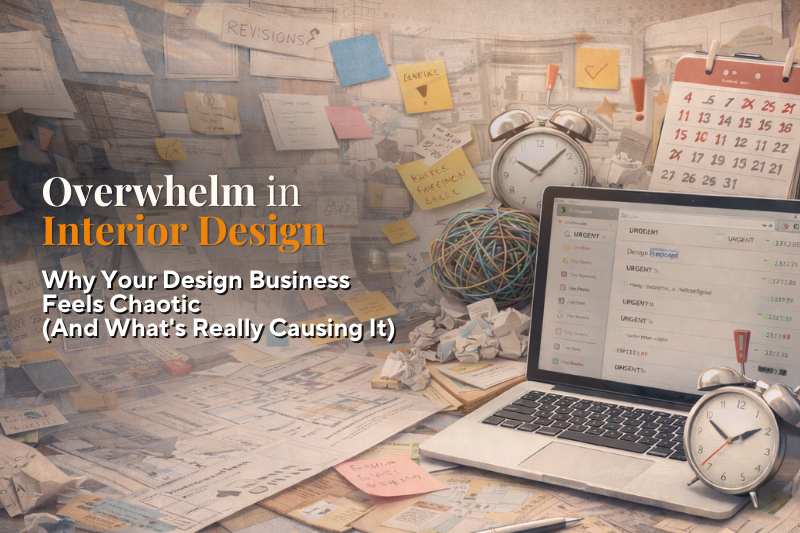
What Overwhelm in Interior Design Looks Like in Business
Overwhelm in interior design rarely appears overnight. It creeps in gradually as your project count increases, expectations rise, and systems fail to evolve. Many assume stress is normal in a growing ArchDesign business, but constant chaos is not a badge of honour.
Here’s how it typically shows up.
A. Creative Overload
Creative overwhelm is often the first red flag. While creativity is the core of interior design business growth, it can become a burden when there is no structure to support it.
Endless Revisions
When there are no revision limits or clear approval stages, projects spiral. Clients keep asking for tweaks, minor changes become major redesigns, and timelines stretch endlessly. Without boundaries, you may feel trapped in a loop of perfectionism and client-pleasing. Over time, your creative energy starts to deplete.
Designing Under Pressure
Last-minute client decisions and unrealistic deadlines create rushed design environments. Instead of thoughtful concept development, you begin designing reactively. Creativity thrives in clarity, not chaos. Designing under pressure reduces innovation and increases mental fatigue.
No Uninterrupted Deep Work Time
Constant notifications, calls, and team queries disrupt creative flow. Deep work requires protected time blocks, but many growing firms operate in interruption mode. Without focus time, even simple design tasks take longer. This compounds the feeling of overwhelm in interior design.
B. Operational Chaos
While creativity gets the spotlight, operations run the business. When systems are weak, overwhelm becomes inevitable.
Inbox-Driven Workflow
If your day starts and ends in your email inbox, your priorities are controlled by others. An inbox-driven workflow makes everything feel urgent. Instead of strategic planning, you jump between tasks. This reactive mode drains decision-making capacity.
Missing SOPs
Standard Operating Procedures (SOPs) are the backbone of scalable interior design business growth. Without them, every project feels new and unpredictable. Team members depend on constant guidance. This increases your involvement in every minor task.
Constant Follow-Ups and Last-Minute Issues
Vendors need reminders, clients need updates, and site teams need clarifications. Without structured tracking systems, things slip through the cracks. Firefighting becomes routine. Over time, your ArchDesign business begins to feel unstable rather than empowering.
C. Client-Induced Pressure
Clients are essential to growth, but unmanaged expectations create overwhelm in interior design.
Scope Creep
When project boundaries are unclear, clients naturally ask for “just one more thing.” Without clear documentation and change-order processes, additional requests go uncompensated. This impacts profitability and mental clarity. Repeated scope creep is a structural issue, not a client personality issue.
Unrealistic Timelines
Clients often underestimate the time required for design, approvals, and execution. If you agree to compressed timelines to secure projects, stress multiplies later. Delays feel like personal failures. Proper expectation setting prevents unnecessary pressure.
Comparison to Pinterest References
Clients frequently compare your work to curated Pinterest boards. These references often ignore budget, context, or structural limitations. Constant comparison can erode confidence. A confident ArchDesign business owner educates clients rather than competing with unrealistic imagery.
D. Growth Without Infrastructure
Ironically, overwhelm in interior design often increases when revenue increases.
More Projects, Same Systems
Taking on additional projects without upgrading systems multiplies complexity. What worked for three projects collapses under eight. Growth without structure leads to instability. Systems must evolve with scale.
Revenue Up, Profit Unclear
You may see higher billing numbers but feel unsure about actual profitability. Without financial tracking clarity, growth feels risky. Financial ambiguity creates subconscious stress. Interior design business growth must be supported by financial transparency.
Hiring Without Clarity
Bringing in team members without defined roles creates confusion. Tasks overlap or fall through gaps. You spend more time managing than leading. Team expansion without process clarity increases overwhelm instead of reducing it.
The Real Causes Behind Overwhelm in Interior Design
Surface-level symptoms hide deeper structural causes. According to insights shared by Shanker De, most chaos stems from foundational gaps, not from external factors.
Let’s examine the real roots.
A. Lack of Business Structure
A missing framework is one of the biggest hidden triggers of overwhelm in interior design. Without structure, every project feels unpredictable and mentally exhausting. Clarity in process reduces chaos dramatically.
No Defined Workflow
Without a mapped client journey, every project feels improvised. You rely on memory instead of documented processes. This increases errors and inconsistencies. A defined workflow transforms your ArchDesign business into a reliable system.
Undefined Project Phases
When phases are unclear, approvals become messy. Clients may revisit previous stages repeatedly. Clear stage-based processes reduce confusion. They also protect creative integrity.
Everything Customised from Scratch
While personalisation is valuable, reinventing the wheel each time is exhausting. Templates for proposals, presentations, and documentation reduce decision fatigue. Customisation should happen within a framework. Structure enhances creativity rather than limiting it.
B. Poor Capacity Planning
Many professionals mistake overcommitment for ambition. However, poor capacity planning is a major cause of overwhelm in interior design. Growth without bandwidth awareness leads to burnout.
Taking on Too Many Active Projects
Saying yes to every opportunity may feel like growth. However, each active project requires mental bandwidth. Without capacity limits, quality declines. Strategic selection protects long-term reputation.
No Time Tracking
If you do not measure design hours, you cannot price accurately. Projects may appear profitable but consume excessive time. Time tracking creates awareness and informed decisions. It is essential for sustainable interior design business growth.
Underestimating Design Hours
Creative tasks often take longer than anticipated. When estimates are unrealistic, schedules collapse. This creates constant catch-up mode. Accurate forecasting reduces stress significantly.
C. Weak Boundaries
Boundaries protect both creativity and profitability. When they are unclear, overwhelm in interior design intensifies quickly. Professional structure builds client respect.
Unlimited Revisions
Offering unlimited revisions may seem client-friendly. In reality, it invites overuse. Clear revision caps encourage decisive collaboration. Structured feedback systems reduce overwhelm in interior design.
Informal Agreements
Verbal commitments create misunderstandings. Detailed contracts protect both parties. Clear documentation prevents emotional disputes. Professional agreements strengthen trust.
24/7 Client Communication
Constant availability may feel responsive, but it drains energy. Defined communication windows maintain professionalism. Clients respect boundaries when they are communicated clearly. Boundaries protect creative sustainability.
D. Decision Fatigue as a Designer
Designers make countless decisions daily, many of them small but cumulative. This repeated evaluation creates mental exhaustion. Without filters, even simple choices feel overwhelming.
Hundreds of Micro-Decisions Daily
From finishes to fixtures, every detail requires evaluation. Repeated decision-making drains cognitive energy. Without systems, even small choices feel heavy. Structured criteria reduce mental load.
Emotional Drain from Constant Judgment
Design decisions often involve subjective feedback. Continuous judgement from clients can feel personal. Emotional resilience is essential. Clear criteria separate professional decisions from personal validation.
No Decision Filters
When there are no design guidelines or brand principles, decisions become reactive. Filters streamline choices. Defined aesthetics and budget frameworks reduce back-and-forth. This protects mental clarity.
Warning Signs You’re Deep in Overwhelm
Overwhelm in interior design often becomes normalised. Many professionals accept stress as part of success. Recognising warning signs early prevents long-term burnout.
Dreading Client Calls
Anxiety before meetings indicates emotional exhaustion. When conversations feel heavy, it signals deeper stress. Healthy businesses do not create constant dread.
Procrastinating Proposals
Delaying proposals may reflect mental overload. When clarity is missing, starting feels difficult. Procrastination often hides decision fatigue.
Creative Fatigue
Feeling uninspired despite experience is a warning sign. Creativity declines when energy is depleted. Sustainable systems restore enthusiasm.
Reactive Communication
Constantly responding instead of leading creates instability. You feel behind rather than in control. Proactive planning reduces this cycle.
Feeling “Busy” but Not in Control
A packed schedule does not equal productivity. If you feel active yet directionless, structure is missing. Control comes from clarity, not busyness.
If multiple signs resonate, it is time to reassess systems. Overwhelm in interior design is not a personality flaw. It is a structural misalignment.
Conclusion
Overwhelm in interior design is not caused by ambition. It is caused by unmanaged growth, unclear systems, weak boundaries, and decision fatigue. When structure is missing, even a thriving ArchDesign business feels unstable. But when workflows, capacity planning, and communication boundaries are aligned, clarity replaces chaos.
If you recognise yourself in this article, don’t ignore it.
Comment below and share which area creates the most overwhelm in interior design for you right now.
Book a strategy call with our ArchScale Guild team, and let’s identify the structural gaps holding your business back so you can lead as a confident ArchDesign business owner with clarity and control.
Your growth deserves systems.

Shanker De is an ArchDesign Business Coach, entrepreneur, and Founder of ArchScale Guild. With 25+ years of experience across 330+ businesses in 15 countries, he helps the founders, principals and studio owners of growing ArchDesign firms, especially in Tier 2 & Tier 3 cities, turning inconsistent leads, silent sales and fluctuating revenue into predictable 2x–5x growth.
Using his proven ArchScale Business Growth Model (BGM), Shanker supports every ArchDesignpreneur in building a scalable ArchDesign business without founder burnout, underpricing, or constant overwhelm.