Every design professional eventually hears a client pause after seeing the fee and say, “That seems expensive.” This is exactly where a well-prepared price objection handling script becomes valuable. Instead of reacting defensively or offering immediate discounts, designers who structure the conversation properly can maintain authority and guide clients back to the true value of the project.
For an ArchDesignpreneur focused on sustainable interior design business growth, handling pricing conversations professionally is essential. As Shanker De, the ArchDesign Business Coach (ABC), explains, successful designers are not the ones who avoid objections, but they are the ones who prepare for them. By using the right scripts and strategies on how to handle price increase objections, designers can protect their pricing integrity while building stronger client relationships.
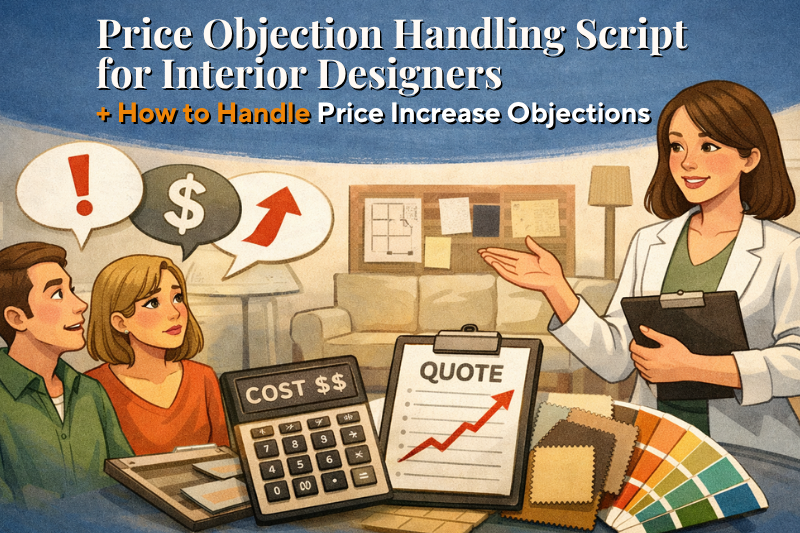
Price Objection Handling Script: Real Conversation Examples
Price objections are often emotional reactions rather than logical conclusions. When clients hear a fee that exceeds their expectations, they may respond with hesitation, comparison, or requests for discounts. A structured price objection handling script helps designers stay calm and lead the conversation instead of reacting defensively.
Most effective scripts follow a four-step approach: Acknowledge → Clarify → Reframe → Confirm. This sequence ensures the client feels heard while gradually shifting the conversation back to the transformation the project will deliver. Let us explore how this works in real client conversations.
A. When a Client Says “It’s Too Expensive”
One of the most common objections designers hear is the simple statement: “Your design fee seems expensive.” Instead of immediately defending the price, the goal is to understand what the client actually means. A structured price objection handling script helps maintain professionalism while guiding the conversation productively.
Example Conversation
Client: “This design fee seems expensive compared to what we expected.”
Designer: “I appreciate you sharing that honestly. Could you help me understand what range you had in mind for the project?”
Client: “We thought the design part would be much lower.”
Designer: “That makes sense. Many clients initially assume the design phase is smaller, but it actually includes planning the entire transformation: space layout, materials, coordination, and ensuring everything works together seamlessly.”
Designer (Reframe): “The goal is to avoid costly mistakes during construction and create a result that reflects your lifestyle perfectly.”
Designer (Confirm): “Would it help if I walked you through how each part of the design process contributes to the final outcome?”
This structure helps the conversation move from price shock to value clarity, which is a crucial mindset shift for designers seeking interior design business growth.
B. When They Ask for a Discount
Clients often ask for discounts simply because they expect negotiation. However, offering immediate reductions can undermine professional positioning. Instead, a strong script ensures the designer protects pricing integrity while still supporting the client’s financial comfort. Instead of lowering the price, the conversation can focus on adjusting the scope or phasing the work.
Example response approach:
Client: “Can you reduce the design fee a bit?”
Designer: “I completely understand wanting to stay within your budget. Instead of reducing the design scope, what many clients find helpful is phasing the project so we focus on the most important areas first.”
Designer (Reframe): “That way you still receive the full design strategy, but we can implement the project in stages that fit your budget comfortably.”
This approach helps an ArchDesignpreneur maintain pricing authority while showing flexibility. According to Shanker De, the moment a designer discounts their expertise, the client begins to question the true value of the service. Offering phased implementation protects both the designer’s reputation and the project quality.
C. When Compared to a Cheaper Designer
Another frequent objection occurs when clients compare quotes from multiple designers. Statements such as “Another designer quoted much less” can easily create pressure if the designer is not prepared.
However, comparisons often highlight differences in approach, experience, and scope rather than simply price. A well-prepared price objection handling script allows the designer to shift the conversation toward expertise and long-term value.
Example response:
Client: “We received a lower quote from another designer.”
Designer: “That’s helpful to know. Different designers structure their services differently, so the pricing often reflects the level of planning, detail, and involvement in the project.”
Designer (Reframe): “My focus is on creating a complete design strategy that avoids costly mistakes and ensures the final space functions beautifully for years.”
This response positions the designer as a strategic professional rather than someone competing on price. Over time, this positioning helps the ArchDesign business attract high-ticket clients who value expertise rather than the lowest quote.
D. When They Say “We Need to Think About It”
The phrase “We need to think about it” often indicates an unspoken concern. Clients may hesitate because of budget worries, timeline uncertainty, or family decision-making dynamics. Instead of ending the conversation immediately, designers can use a gentle follow-up question to uncover the real concern.
A structured script allows the designer to address the hesitation without sounding pushy. The goal is to create a safe space for honest feedback.
Example response:
Client: “We need some time to think about it.”
Designer: “Of course, that makes sense. Just so I can support you better, may I ask if there is any specific concern or question about the proposal?”
This simple question often reveals the real objection behind the hesitation. Once the designer understands the true concern, they can address it directly rather than leaving the conversation unresolved.
Developing this communication skill is part of becoming a confident ArchDesign business owner who leads client discussions with clarity.
How to Handle Price Increase Objections (Existing Clients)
While new client conversations are important, pricing discussions with existing clients can feel even more delicate. Long-term clients may become accustomed to a certain pricing structure, and any adjustment can create hesitation.
Learning how to handle price increase objections is therefore essential for maintaining profitability while protecting relationships. Designers must communicate changes transparently and proactively rather than waiting for clients to question them.
A. Communicating a Price Increase Proactively
The best way to manage pricing adjustments is to communicate them before clients encounter them unexpectedly. Proactive communication builds trust and prevents confusion during project discussions.
Explain the reason behind the increase
When announcing a price revision, clearly communicate the context, such as improved service quality, expanded team capabilities, or increased project complexity. Framing it as a natural stage of business evolution helps clients understand the adjustment.
Communicate proactively and transparently
For an ArchDesignpreneur, informing clients in advance shows professionalism and respect. Early communication prevents surprises and maintains trust in the client relationship.
Position it as a value evolution
Price increases should be presented as part of the growing value and expertise of the business rather than simply a change in cost.
B. Script for Handling Price Increase Pushback
Even with proactive communication, some clients may still question the new pricing. In such cases, having a clear response framework helps maintain professionalism and avoid emotional reactions.
A practical handling script to handle price increase objection follows three steps: acknowledge loyalty, explain the adjustment, and reinforce the continued value.
Example response:
Client: “We noticed the design fee has increased compared to our previous project.”
Designer: “I truly appreciate the trust you’ve placed in me across your projects. Over the past year, we’ve expanded our design process and resources to deliver more comprehensive planning and project coordination.”
Designer (Reinforce Value): “The updated pricing reflects that expanded service and ensures we continue delivering the level of quality you expect.”
This approach keeps the conversation respectful while reinforcing the professionalism of the service.
Preventing Price Objections Before They Happen
The most effective way to manage objections is to reduce them before they appear. Many pricing challenges arise not because the fee is unreasonable, but because the client was not properly prepared for it.
Designers who build structured communication systems often experience fewer objections during proposal presentations. By guiding the client journey carefully, designers can ensure that pricing conversations feel natural rather than surprising.
A. Pre-Qualify Budget Early
One of the simplest ways to reduce pricing objections is to discuss budget during the discovery phase. When clients share their expectations early, designers can evaluate whether the project aligns with their services and expertise.
A transparent budget conversation also helps clients understand the investment required for quality design work. Instead of waiting until the proposal stage, the designer can align expectations right from the beginning.
For the ArchDesign business, this step prevents wasted time on projects that are not financially aligned. It also demonstrates professionalism and strategic thinking, which clients appreciate when choosing a designer.
B. Anchor Value Before Sharing Fees
Another effective strategy is to discuss transformation before discussing pricing. When clients first hear about the design process, the lifestyle improvements, and the long-term benefits, they develop a stronger appreciation for the value.
If pricing is presented before value is explained, the number can feel abstract or excessive. However, when the client already understands the scope and impact of the work, the fee becomes easier to accept.
Designers who follow this approach naturally reduce objections during proposal presentations. By leading the conversation with outcomes, they create a context where the pricing feels justified.
C. Improve Proposal Presentation
Finally, the structure of the proposal itself plays a significant role in preventing objections. A clear, well-organised proposal helps clients understand exactly what they are investing in.
Instead of presenting a single number, designers can break down the process into phases such as concept development, space planning, material selection, and project coordination. This approach shows the depth of work involved in a professional design project.
Outcome-focused proposals also highlight the transformation the client will experience. By connecting each service element to the final result, designers reinforce the value of the investment.
Conclusion
Price objections are a natural part of running a design business, but they do not have to feel uncomfortable or confrontational. With the right price objection handling script, designers can navigate these conversations confidently while reinforcing the value of their expertise.
Handling price increase objection using the right script is equally important for long-term business sustainability. Transparent communication, clear value positioning, and structured conversations ensure that clients respect both the pricing and the professionalism behind it.
If you have experienced challenging pricing conversations with clients, share your thoughts in the comments. What kind of price objections do you hear most often?
And if you want structured systems to grow your ArchDesign business, consider booking a strategy call with Shanker De to learn how to build a profitable and scalable design practice.

Shanker De is an ArchDesign Business Coach, entrepreneur, and Founder of ArchScale Guild. With 25+ years of experience across 330+ businesses in 15 countries, he helps the founders, principals and studio owners of growing ArchDesign firms, especially in Tier 2 & Tier 3 cities, turning inconsistent leads, silent sales and fluctuating revenue into predictable 2x–5x growth.
Using his proven ArchScale Business Growth Model (BGM), Shanker supports every ArchDesignpreneur in building a scalable ArchDesign business without founder burnout, underpricing, or constant overwhelm.